
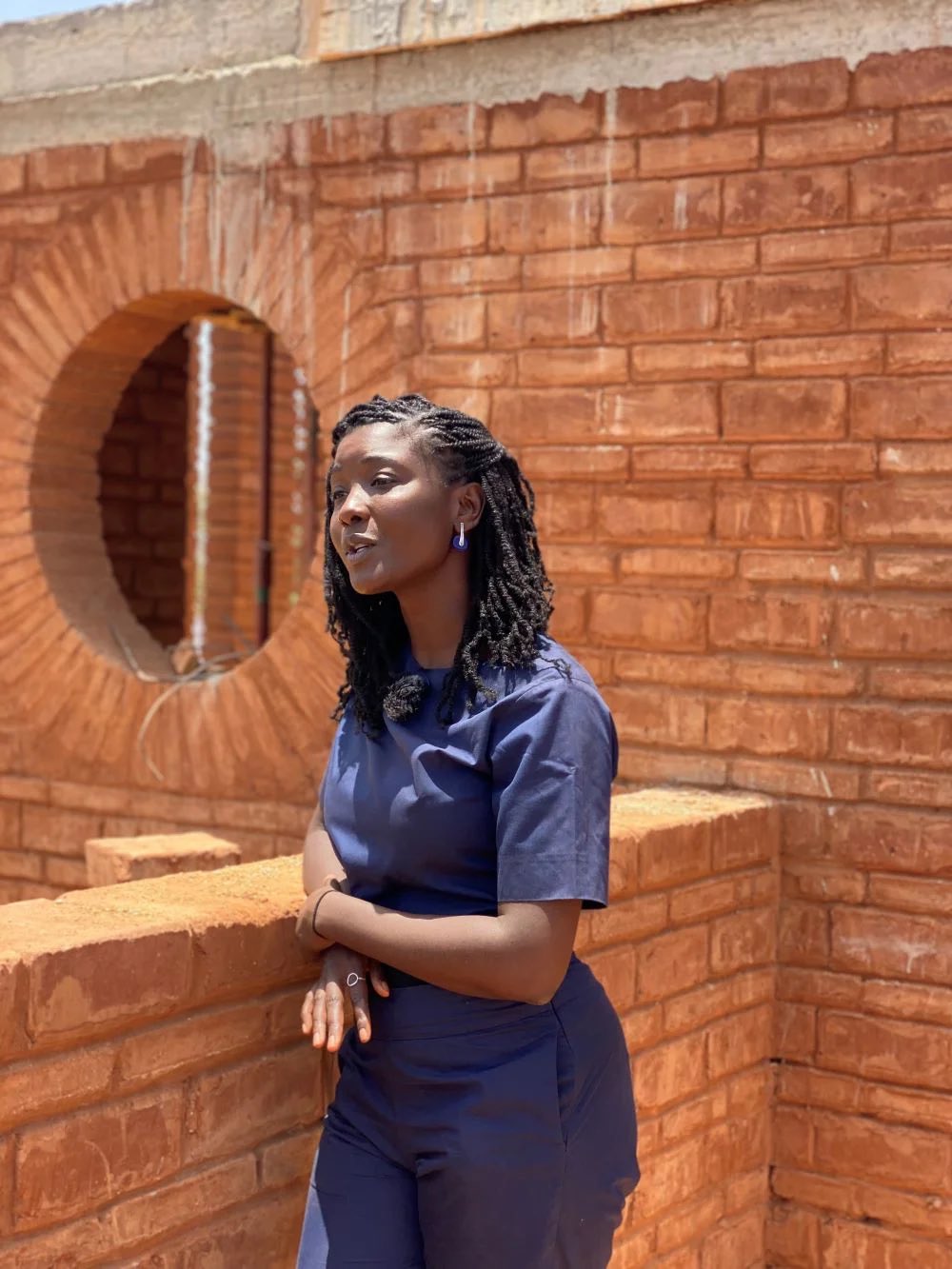
Photo by @shavnyuy / X
Newz.Africa | Africa Desk | 14 April 2026 | West Africa | earth architecture Senegal
Nzinga B. Mboup, co‑founder of the Dakar‑based practice Worofila, is leading projects that revive compressed earth and typha fibre construction. Her work challenges the dominance of concrete in Senegal’s capital and highlights sustainable alternatives rooted in West African traditions.
Africa’s most honest architecture is increasingly coming from its women.
— SHAV★ (@shavnyuy) April 10, 2026
Nzinga B. Mboup grew up between Mozambique, Cameroon, South Africa and Senegal. She saw what colonial urbanism did to African cities. Then she decided to build differently.
Her practice Worofila works with… pic.twitter.com/wPY14ka8D6
What’s Happening
Worofila, established in 2019, confirmed in its official practice documentation that it specialises in bio‑climatic architecture using raw earth and plant fibres. The firm’s Diamniadio Eco‑Pavilion was commissioned by Senegal’s Ministry of Environment in 2019. It was built with clay adobe bricks and typha fibre. This demonstrates government recognition of alternative materials.
Mboup has stated in interviews that her practice seeks to create equitable spaces and question modernity in African architecture. Worofila’s portfolio includes projects such as the Institut Français Dakar (2021) and NKD House (2024), each designed with ecological materials.
Senegal’s Urban Planning Code (Law No. 2023‑20) sets the framework for sustainable development and management of urban areas. While concrete remains the dominant material in Dakar, the code provides scope for practices like Worofila. In this way, firms can align with national sustainability goals.
Newz.Africa Analysis
The implications of Worofila’s work are significant for Senegal’s construction sector. By reintroducing earth and fibre materials, the practice demonstrates that climate‑sensitive design can be achieved. This can happen without reliance on imported or high‑emission materials.
Scaling earth construction presents challenges. Concrete remains politically convenient and economically entrenched, with established supply chains and regulatory familiarity. Shifting towards earth materials will require broader policy support, industry training, and public awareness.
The Diamniadio Eco‑Pavilion illustrates how government commissions can legitimise alternative methods. If similar projects are adopted in housing or public infrastructure, Senegal could reduce construction emissions. Furthermore, the country could improve thermal comfort in urban environments.
Mboup’s approach also intersects with cultural heritage. By drawing on materials historically used in West Africa, Worofila reconnects architecture with local identity. This has potential to influence urban planning debates in Dakar, where colonial legacies shaped much of the built environment.
Next steps include monitoring whether Senegal’s Ministry of Urban Planning issues further guidance on sustainable materials. It is also important to see whether regulatory frameworks evolve to support wider adoption. The success of Worofila’s projects may encourage other architects to integrate earth construction. Moreover, this could position Senegal as a leader in climate‑responsive urbanism.
Worofila’s projects illustrate how sustainable architecture can be rooted in local heritage while addressing modern urban challenges. As Senegal continues to refine its urban planning framework, the practice’s work signals a possible shift towards climate‑responsive construction. This approach reduces emissions and reconnects cities with traditional knowledge. The trajectory of these efforts will depend on whether regulatory authorities and industry stakeholders embrace earth materials as viable alternatives to concrete.
Original Reporting
Original reporting: Newz.Africa reviewed Worofila’s official practice documentation and project portfolio, including the Diamniadio Eco‑Pavilion commissioned by Senegal’s Ministry of Environment. Senegal’s Urban Planning Code (Law No. 2023‑20) was examined to confirm regulatory context.
About the Author


