
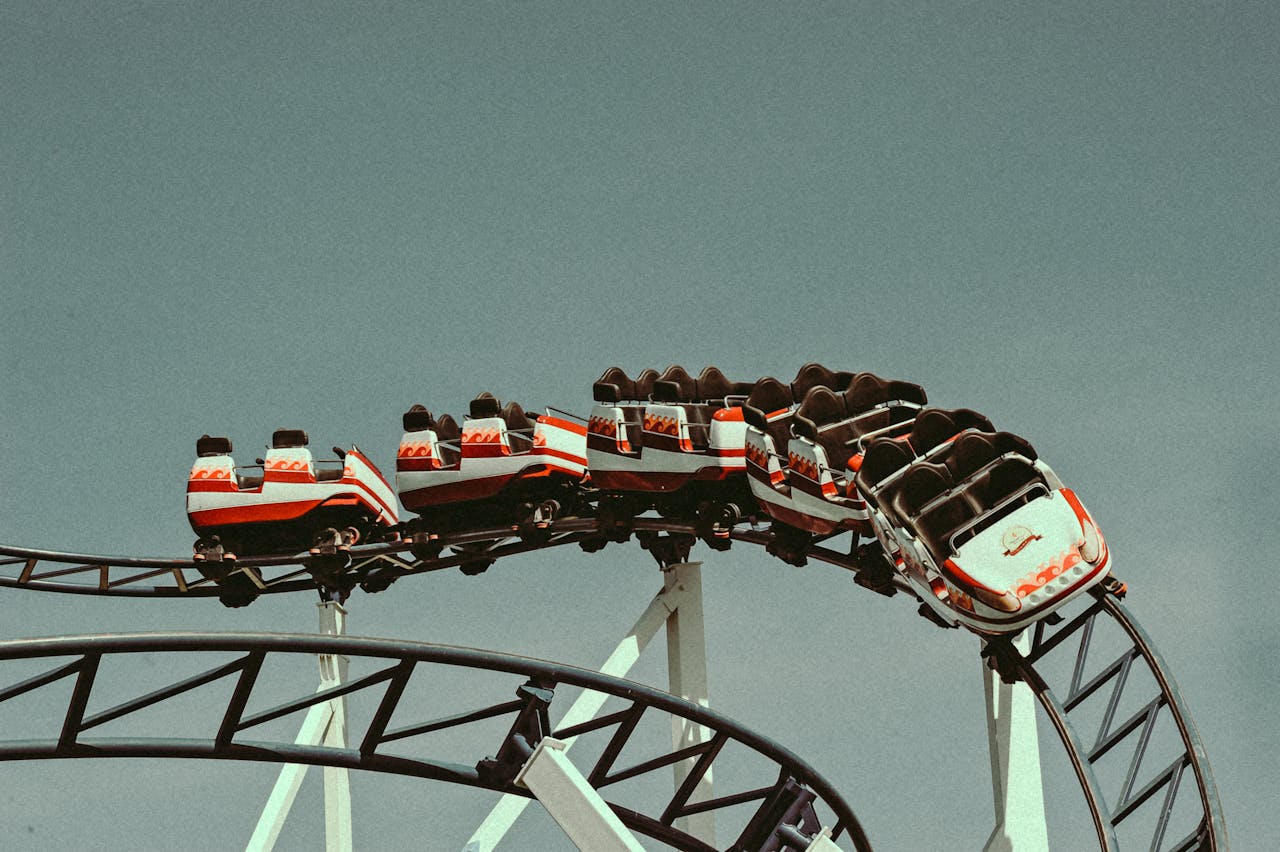
Photo by Min An via Pexels
By Newz.Africa, Africa Desk | Accra, Ghana | 18 February 2026 | Ghana amusement park
News that Ghana’s largest amusement park is under construction has triggered a wave of online reaction, revealing both excitement about new tourism infrastructure and uncertainty about where the project is located, who it serves, and whether it can be sustained long term.
The project entered the public conversation after images and video clips of construction works began circulating online, accompanied by claims that the development would transform Ghana’s tourism offering. Almost immediately, social media users began debating the basics.
Ghana's biggest amusement park is under construction.
— 𝕏 Ghana 🇬🇭 (@xghana_) February 17, 2026
📍Akomadan, Offinso North District pic.twitter.com/7tG9xk9NuR
Where exactly is it being built? Who is behind it? And will it be properly maintained once completed? Those questions now dominate the conversation as enthusiasm collides with scepticism.
Ghana amusement park sparks excitement over tourism potential
Supporters of the project see it as a long overdue investment in large‑scale leisure infrastructure. Several users praised the idea of a modern amusement park that could attract both domestic visitors and international tourists.
Some framed the development as a sign that Ghana’s tourism sector is evolving beyond heritage and cultural tourism into entertainment‑driven destinations. Others welcomed the fact that the project is not located in central Accra, arguing that regional development is necessary and overdue.
There is also visible political praise in the reactions. A handful of users credited current and former government officials, while others framed the project as evidence that business activity is expanding beyond traditional commercial hubs. For these commentators, the amusement park represents optimism. A belief that Ghana is “levelling up” and that 2026 could mark a shift in how tourism investments are distributed across regions.
Location confusion dominates online discussion
Despite the excitement, one of the most repeated themes is confusion over location. Different users identified different towns and districts, with some correcting others and insisting the site is in Afienya rather than Offinso or Akomadan.
This uncertainty has fuelled scepticism. Several users admitted they had passed the site multiple times without knowing what was being built. Others questioned accessibility, pointing to road conditions and distance from major population centres. The lack of clear, consistent public information appears to be amplifying doubt. When people cannot easily identify where a flagship project is located, confidence in planning and execution weakens.
The confusion has also raised questions about transport infrastructure. Even users supportive of the idea stressed that roads, signage, and supporting services would need significant upgrades for the park to succeed.
Maintenance concerns overshadow the announcement
Beyond location, maintenance has emerged as the single biggest concern. Multiple commenters reduced their reaction to one word repeated again and again: maintenance. This reflects a familiar anxiety in Ghana’s public discourse. Large projects are often announced with fanfare, only to deteriorate over time due to poor upkeep, unclear ownership, or funding gaps.
Some users questioned whether the operators would be able to sustain rides, water systems, and facilities in the long term. Others asked directly who owns the project and who will be responsible for ongoing operations.
The emphasis on maintenance suggests that public trust is fragile. Infrastructure alone is no longer enough to impress. People want evidence of long‑term planning, not just construction.
Political undertones surface in the reaction
As with many large developments, political interpretation followed quickly. A few users framed the project as a reason to support a particular party, while others pushed back against politicising infrastructure.
This dynamic reflects a broader pattern in Ghana’s online spaces, where development projects are often used as proxies for debates about governance, credit, and accountability.
Notably, many commenters resisted this framing. Several responses focused instead on practical questions: who will go there, how much it will cost, and whether it will genuinely serve ordinary Ghanaians rather than a narrow market.
Why the Ghana amusement park debate matters
The reaction to the amusement park is less about rides and attractions than it is about confidence. Ghanaians are clearly open to ambitious tourism projects. They want regional development. They want modern leisure spaces. Until more details are publicly confirmed, the project will continue to exist in two parallel narratives. One of excitement and national pride. The other of doubt shaped by past experiences with unfinished or poorly maintained developments.
About the Author


