
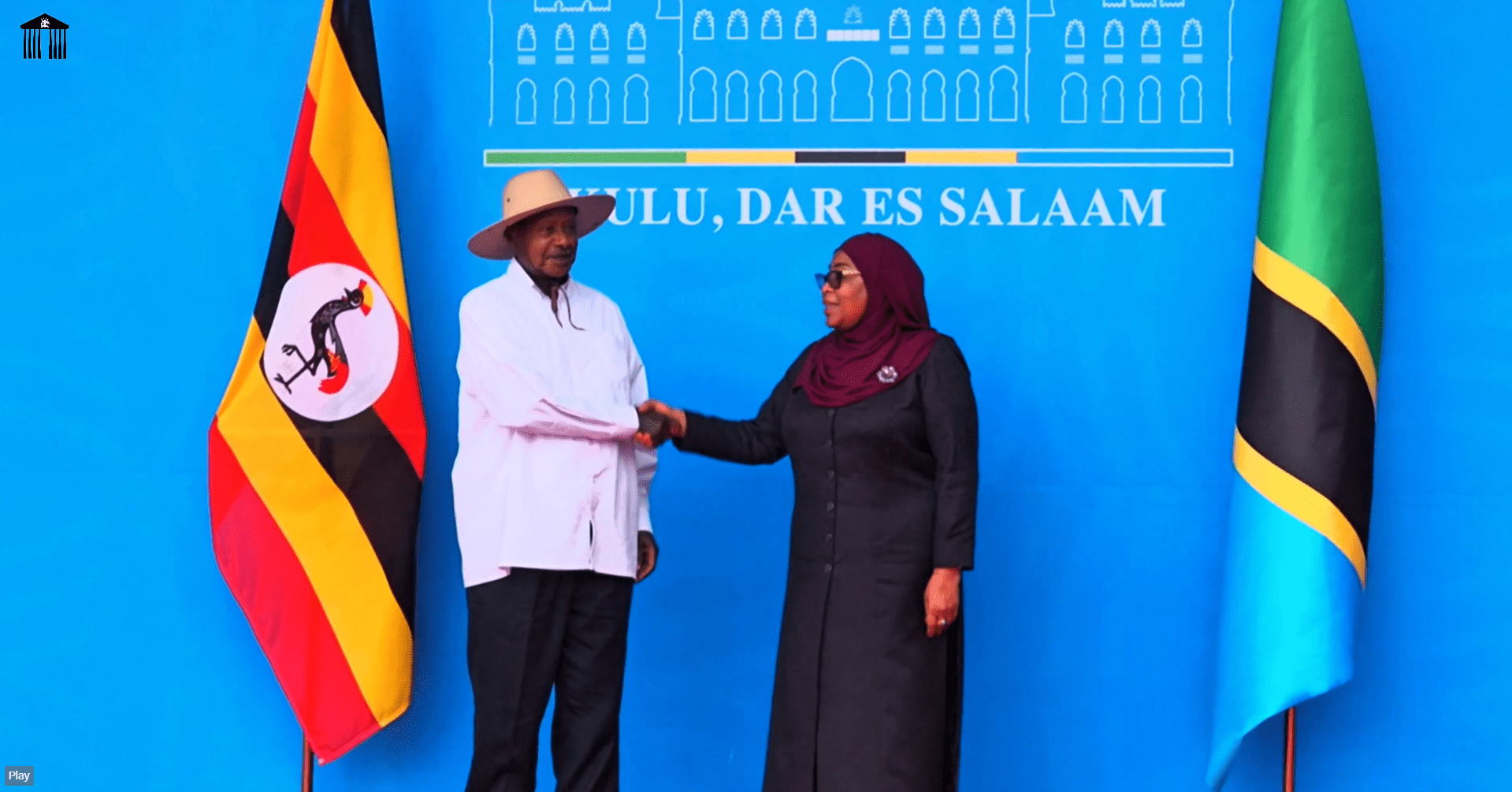
Screenshot from video by State House Uganda via X
By Newz.Africa News Desk | Dar es Salaam, Tanzania | 9 February 2026 | Uganda Tanzania cooperation
Uganda and Tanzania have announced a renewed push to strengthen cooperation in energy, trade, infrastructure, and regional stability. The update followed high‑level talks held in Dar es Salaam between President Yoweri Museveni and President Samia Suluhu Hassan. Officials said the meeting focused on major energy projects, transport links, and plans to expand access to ports and regional markets.
Uganda and Tanzania today reaffirmed their commitment to strengthen cooperation in energy, trade, infrastructure and regional peace following high-level talks in Dar es Salaam.
— State House Uganda (@StateHouseUg) February 7, 2026
President @KagutaMuseveni and his host, President @SuluhuSamia, highlighted ongoing energy… pic.twitter.com/gOHD04SzCK
Both governments confirmed progress on the East African Crude Oil Pipeline (EACOP). They also highlighted discussions on extending railway connectivity and removing non‑tariff barriers that slow regional trade. Leaders described the meeting as part of a shared commitment to building long‑term economic resilience and peace in the Great Lakes Region.
Public reaction challenges the Uganda Tanzania cooperation narrative
Despite the optimistic tone of the official statement, public reaction online is sharply divided. Several users dismissed the announcement as political theatre. One commenter said the elections in Uganda remain “dubious.” Another argued that the two countries share troubling similarities, including statistics on abductions and killings. Some users questioned why cooperation announcements keep resurfacing yet fail to reflect lived realities.
Others mocked long‑standing leadership. One user asked what has been happening for forty years, referencing Museveni’s long rule. Another claimed Tanzania is “dealing with a blood sucker,” pointing to distrust of political elites. A different commenter alleged that both leaders have a history of suppressing opponents, posting criticism in Swahili about leaders meeting to find “better ways to eliminate political rivals.”
Still, a minority praised the engagement. One supporter described the Ugandan president as a “visionary” leader. Another user celebrated the meeting with heart‑emoji flags of both nations, signalling regional solidarity.
The overall conversation shows deep scepticism, especially around governance, democracy, and human rights.
Scepticism over regional stability commitments
Many reactions also dismissed the regional peace narrative. Critics pointed to unresolved internal issues in both countries. Some raised concerns about abductions, disappearances, and police violence. They questioned how leaders who face serious domestic criticism could credibly speak on peace and stability in the region.
Others highlighted fears of escalating repression. The critical responses suggest that people are unwilling to separate regional diplomacy from domestic political realities.
A few comments addressed economic concerns. One user said Uganda wants access to the world market but must first address its governance challenges. Another said promises of cooperation sound repetitive and disconnected from everyday struggles.
The public sentiment shows clear frustration. Many feel these diplomatic trips do not change material conditions on the ground.
Regional cooperation framed as progress
The official message, however, remains focused on infrastructure and economic links. According to reports, leaders reviewed energy pipeline plans, port access options, and long‑term trading corridors. Governments see these projects as essential for the region’s growth.
They also emphasised peace and regional dialogue. Tanzanian officials reiterated their commitment to reducing trade barriers and supporting stability in East Africa. Uganda stressed the importance of protecting African independence and building stronger economic partnerships.
But the public reaction shows the gap between official narratives and lived experiences.
Original reporting
Newz.Africa analysed dozens of public comments.
Recurring themes include:
- distrust of political leadership
- scepticism about regional cooperation
- criticism of human‑rights records
- concerns about abductions and killings
- sarcasm about long‑term incumbency
- frustration about economic hardship
- accusations of hypocrisy in peace messaging
- mixed but limited praise for diplomacy
The comments show a strong split between official optimism and public disillusionment.
Primary artefact
The X Embed below shows:
- comments calling elections dubious
- complaints about shared patterns of violence across the two nations
- remarks mocking long‑term leadership
- emotive comments accusing leaders of oppressive tactics
- praise from a small number of supporters
- nationalist emojis signalling cross‑border solidarity
The reactions are highly emotional and politically charged.
Uganda and Tanzania today reaffirmed their commitment to strengthen cooperation in energy, trade, infrastructure and regional peace following high-level talks in Dar es Salaam.
— State House Uganda (@StateHouseUg) February 7, 2026
President @KagutaMuseveni and his host, President @SuluhuSamia, highlighted ongoing energy… pic.twitter.com/gOHD04SzCK
Also Read:
About the Author


