
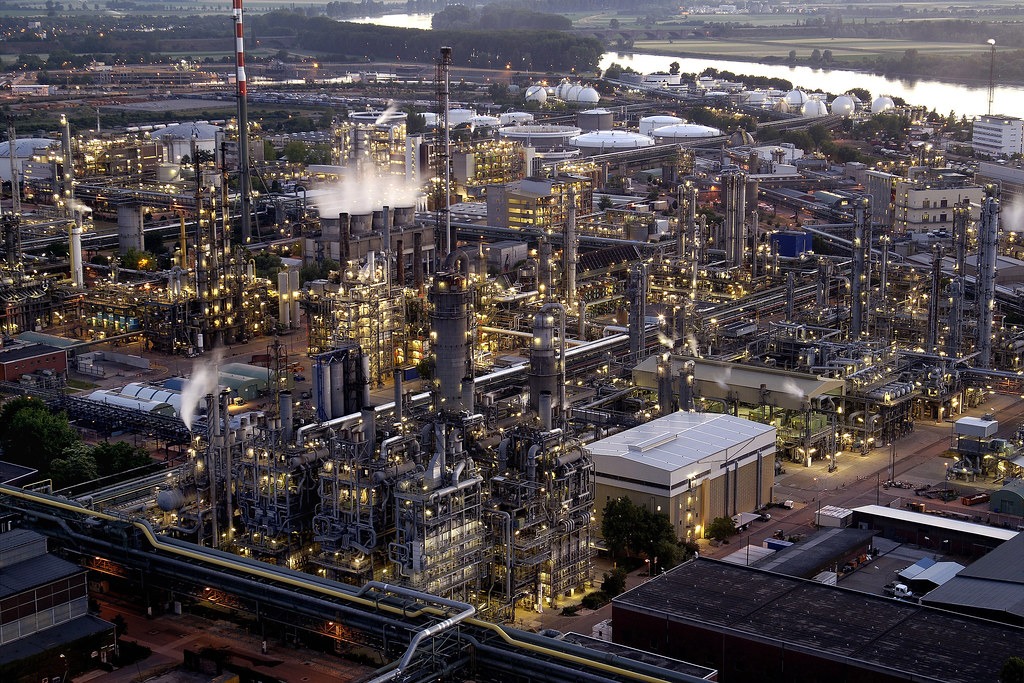
Photo by BASF - We create chemistry is licensed under CC BY-NC-ND 2.0 via WikiMedia
By Newz.Africa, News Desk | 07 April 2026 |Dangote, Nigeria| Dangote refinery exports
Nigeria’s Dangote Petroleum Refinery has confirmed it is operating at maximum capacity of 650,000 barrels per day, exporting gasoline and urea fertiliser to African markets amid supply disruptions linked to the Iran war. The refinery’s output, supported by increased crude allocations from the Nigerian National Petroleum Company (NNPC), is helping stabilise regional fuel supply at a critical moment.
What’s Happening
In its April 2026 statement, Dangote Group said: “We have the capacity to supply Nigerians and most of West Africa, Central Africa, and East Africa. In recent days, we have shipped 17 cargoes of gasoline to neighbouring countries.”
The company added that fertiliser exports had also risen: “In the last couple of days, we’ve been looking to mostly African countries, which we were not doing before.”
The refinery has capacity to produce up to three million metric tonnes of urea annually, much of which is now redirected to African markets instead of traditional buyers in the United States and South America.
NNPC confirmed in its April allocation notice: “Seven crude cargoes have been allocated to the Dangote Refinery for May, compared to five in previous months. This increase reflects our commitment to ensuring adequate domestic supply.”
Refinery officials clarified that negotiations are ongoing, with expectations of approximately 6.15 million barrels for the month. The Nigerian Upstream Petroleum Regulatory Commission (NUPRC) separately confirmed national crude output at 1.8 million barrels per day, stating:
“Nigeria’s production levels remain stable, supporting supply to domestic refiners.”
Dangote Group has indicated that about 75% of the refinery’s production is reserved for Nigeria, with the remainder available for export. Countries including South Africa, Ghana, and Kenya have approached the refinery for supply contracts, reflecting its growing role in continental energy security. South Africa has sought a standard 12‑month contract, while Ghana and Kenya have initiated discussions for shorter‑term supply agreements.
Dangote also highlighted its interest in crude priced in local currency: “We hope to get more crude cargoes priced in naira to help curb fuel costs.”
Newz.Africa Analysis
The refinery’s maximum output provides a buffer against regional shortages, but Nigeria continues to face record‑high fuel prices due to elevated global crude costs. Dangote has signalled interest in securing crude cargoes priced in local currency, a move that could reduce exposure to international price volatility and ease domestic fuel costs.
For African neighbours, the refinery’s exports represent a critical stabiliser. South Africa has sought a 12‑month supply contract, while Ghana and Kenya have also initiated discussions. This shift highlights the refinery’s strategic importance beyond Nigeria, positioning it as a continental hub for both fuel and fertiliser.
Risks remain around crude allocation volumes and pricing mechanisms. If NNPC supply falls short or global crude prices rise further, Nigeria’s domestic market may continue to experience pressure despite the refinery’s full capacity. The balance between domestic reservation and export demand will be closely watched in the months ahead.
Original Reporting
Newz.Africa reviewed Dangote Petroleum Refinery press releases dated March and April 2026, NNPC crude allocation notices, and statements from the Nigerian Upstream Petroleum Regulatory Commission. Requests for comment were sent to Dangote Group and NNPC; refinery officials confirmed ongoing negotiations on May crude cargo volumes.
About the Author


