
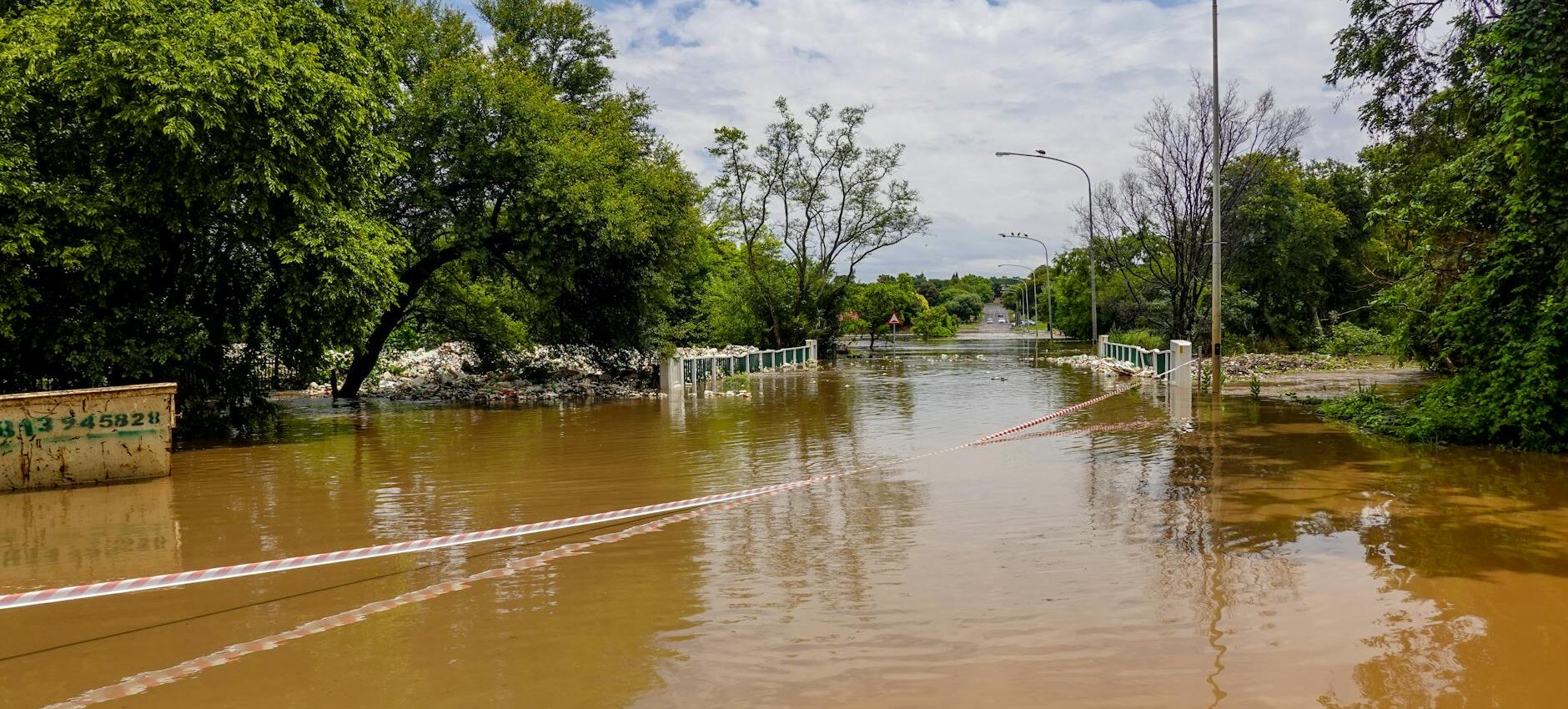
Photo by Magda Ehlers / Pexels
Newz.Africa, Africa Desk | 23 April 2026 |Kenya | Kenya flood relocation
The Kenyan government has expanded its flood relocation programme targeting households in high-risk areas following continued seasonal rainfall. The Ministry of Interior confirmed the move as part of an ongoing disaster response strategy. The policy directly affects thousands of families living in flood-prone zones.
What’s Happening
The government specified that relocation efforts prioritise households previously affected by flooding, with local administrative officers responsible for registering displaced residents. According to the ministry statement, funding allocations have already been released to county governments to support transport and emergency accommodation.
Infrastructure assessments are also underway, with engineers evaluating drainage systems and riverbank integrity. The Ministry noted that compensation guidelines for displaced households are in place, though timelines for disbursement were not detailed in the release.
In an official statement published by the Ministry of Interior, authorities outlined a phased relocation plan covering counties identified through national disaster risk assessments.
The statement confirms that temporary shelters have been established, alongside coordinated food distribution and medical support through the National Disaster Operations Centre.
Newz.Africa Analysis
The expansion of the relocation programme reflects a policy transition towards pre-emptive disaster risk management. By identifying high-risk zones through formal assessments and acting before peak flood events, authorities are attempting to reduce the recurring cycle of displacement that has historically characterised flood response in several regions.
A central implication lies in how relocation is implemented at county level. While national authorities have confirmed funding allocations and coordination structures, operational delivery typically depends on local administrative capacity. Variations in registration processes, shelter readiness, and logistical coordination may influence how consistently the programme is applied across different counties. This introduces the possibility of uneven outcomes, particularly in areas with limited administrative infrastructure.
The absence of defined compensation timelines is another key factor. Although compensation frameworks are acknowledged, delays in disbursement could affect household decision-making during relocation. For families reliant on local livelihoods, even temporary displacement carries economic consequences, including loss of income and disruption to informal economic activity. The timing and predictability of compensation therefore play a direct role in determining the programme’s effectiveness at household level.
The inclusion of infrastructure assessments signals a broader planning horizon beyond immediate relocation. Evaluations of drainage systems and riverbank stability suggest that authorities are linking emergency response with longer-term mitigation measures. If these assessments translate into capital investment or engineering interventions, they may contribute to reducing structural flood risk over time. However, such outcomes depend on follow-through in budgeting, procurement, and project execution.
Coordination with the National Disaster Operations Centre
Coordination with the National Disaster Operations Centre introduces an element of centralised data management, which may improve tracking of affected populations and resource allocation. Reliable data systems are particularly relevant in disaster contexts, where gaps in information can lead to duplication of effort or exclusion of vulnerable groups. The effectiveness of this coordination will depend on the quality and timeliness of data collected during the relocation process.
Looking ahead, the programme’s impact will likely be shaped by continuity. Flood risk is seasonal and recurring, and relocation strategies require sustained policy attention rather than one-off interventions. If maintained over multiple cycles, the framework could contribute to a gradual shift in settlement patterns away from high-risk zones. If not sustained, the programme may revert to short-term displacement management without altering underlying vulnerability.
Original Reporting
Newz.Africa reviewed the Ministry of Interior flood response statement and National Disaster Operations Centre situation report.
About the Author