
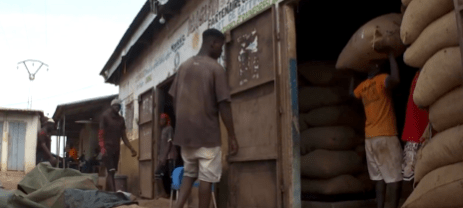
Screenshot via X
AFRICA DESK | Abidjan | Ivory Coast | 18 February 2026 | Ivory Coast Cocoa
Public debate around Ivory Coast’s cocoa industry has intensified as images of unsold beans piling up in warehouses circulate alongside calls for Africa to retain more value from its agricultural output. Farmers, cooperatives, and commentators are voicing frustration at a system that leaves producers disconnected from the markets their labor sustains.
Cocoa crisis dominates public reaction
Tweets and commentary highlight the inequities of global trade. Observers argue that while Ivory Coast grows nearly half of the world’s cocoa, farmers remain locked out of direct market participation. Some describe the current situation as a systemic flaw, where multinational buyers halt purchases and farmers are left unpaid. Others call for new approaches, including local processing of cocoa into chocolate within Africa, so that margins remain at origin rather than flowing abroad.
Farmers burdened by unsold cocoa
Transcripts Reuters video interview from local warehouses describe beans stacked to the ceiling, with cooperatives owing farmers significant sums. Farmers such as Frédéric Kouassi-Kouassi report storing bags of beans at home, unable to sell at the official farmgate price set by the Coffee and Cocoa Council. Buyers are offering lower rates despite regulations, leaving farmers with little choice but to accept. With the mid-crop harvest approaching, unpaid stockpiles are becoming a financial and logistical burden.
But honestly, things haven’t been going well for quite some time now. So everything is at a standstill for the moment, and we currently owe the farmers a lot of money. Dagnogo’s hope is that the Coffee and Cocoa Council will step in.
Calls for direct trade access
Commentators stress that the gap is not about information or technology, but about access to trade itself. A farmer in Duekoue can grow cocoa that ends up on shelves in Paris or New York yet cannot sell directly to a single buyer without intermediaries. Public voices suggest solutions ranging from regional processing in Burkina Faso to digital mechanisms that would allow farmers to tokenize their harvests and connect with buyers abroad.
Regulator intervention under scrutiny
The Coffee and Cocoa Council raised the marketing price to a record 2,800 CFA francs per kilogram in January, aiming to improve farmer incomes. It also launched a programme to buy beans directly to ease the backlog. Yet global prices have since dropped to their lowest levels in more than two years, undermining the regulator’s efforts. Farmers and cooperatives remain uncertain whether these measures will resolve the crisis.
Human resilience amid uncertainty
Despite unpaid harvests and mounting debts, farmers express determination to continue. Kouassi-Kouassi notes that “the trees are still alive,” reflecting a refusal to be discouraged even as warehouses overflow. The cocoa crisis has become both a symbol of global market fragility and a rallying point for advocates demanding structural change in how Africa participates in trade.
About the Author