
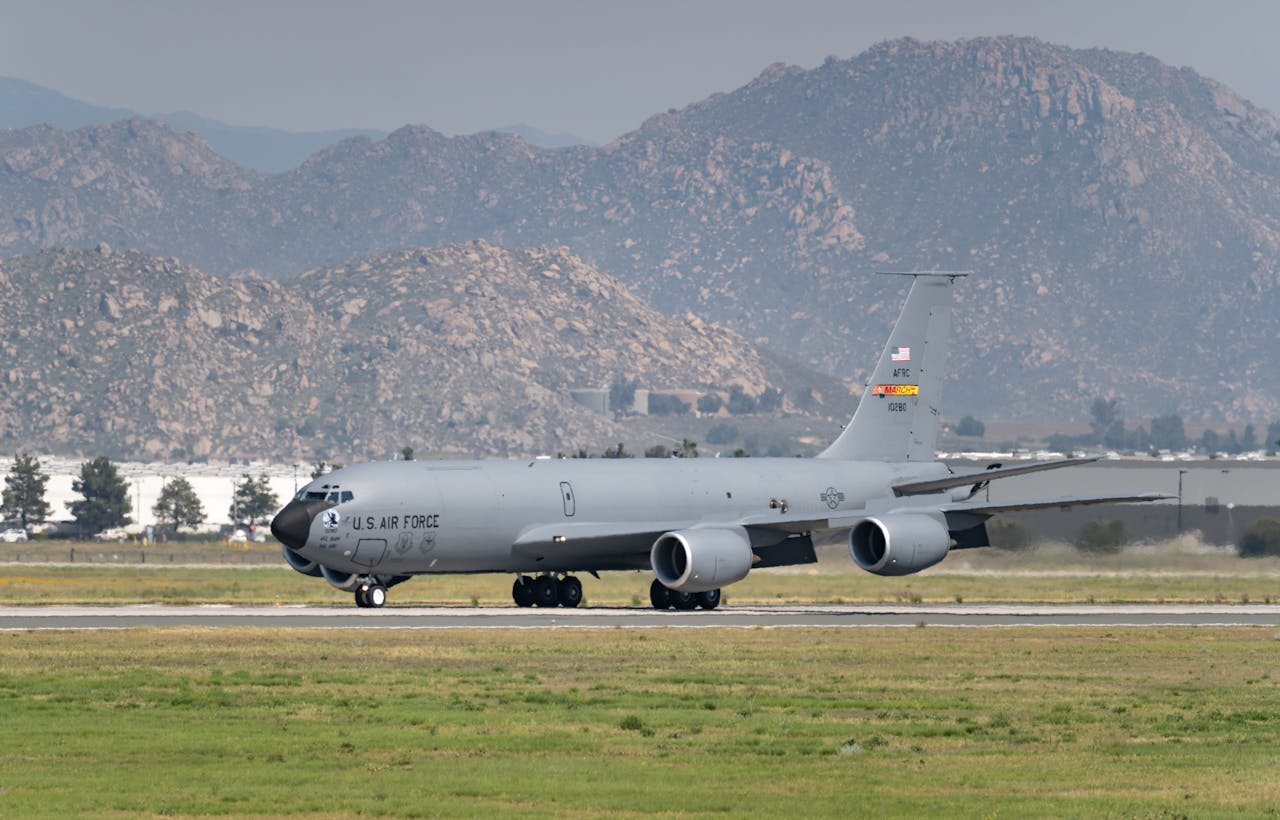
Photo by Soly Moses via Pexels
By Newz.Africa, Africa Desk | Abuja, Nigeria | 16 February 2026 | US troops Nigeria
Reports claiming that United States military personnel have begun arriving in Nigeria have spread rapidly across social media, reopening long‑standing anxieties about foreign military involvement. The claims suggest a limited deployment linked to counterterrorism cooperation with Nigeria’s armed forces. While the numbers cited are relatively small, the reaction has been anything but muted. The discussion has been shaped as much by history as by the lack of official clarity. For many Nigerians, the question is not only whether the reports are true, but what they would mean if they are.
The claims originated from defence‑focused accounts that reported the arrival of an initial group of US personnel. The deployment is described as involving roughly 200 troops, arriving in phases via military transport aircraft. The stated purpose is advisory and support roles tied to counterterrorism operations. No detailed public briefing from Nigerian authorities accompanied the reports. That silence has played a central role in how the story is being interpreted.
Reports face early scrutiny
Scepticism appeared almost immediately after the claims began circulating. Many users questioned where the aircraft allegedly landed and which bases were involved. Others asked why such a development would surface on social media before any official Nigerian statement. Calls for verification dominated the early responses. The demand was for specifics rather than reassurance.
This caution reflects recent experience. Nigerians have repeatedly encountered exaggerated or misleading security claims online. Over time, this has hardened public expectations around evidence and transparency. Unverified reports, especially those involving foreign forces, now trigger doubt by default. In this environment, silence from official channels amplifies suspicion rather than calming it.
US troops Nigeria framed as limited assistance by supporters
A smaller group of commenters engaged with the reports on the assumption that they may be accurate. These voices framed the alleged deployment as limited and technical rather than operational. They pointed to the reported scale, arguing that a few hundred personnel suggests advisory roles rather than combat involvement. Intelligence sharing, logistics support, and training were cited as likely functions.
For this group, the priority is effectiveness. Nigeria faces persistent insurgency, banditry, and kidnapping threats. From this perspective, external support is judged by outcomes rather than origin. Sovereignty, they argue, is preserved if command remains Nigerian and the scope is clearly defined.
Strong resistance rooted in history
The dominant tone of the reaction, however, has been rejection. Many commenters responded by invoking past US military engagements in other countries. Afghanistan, Iraq, and Libya were repeatedly cited as cautionary examples. For these users, US military involvement is associated with prolonged instability rather than lasting security gains.
The concern expressed was not centred on troop numbers. It was centred on precedent. Even limited deployments were described as footholds that expand over time. This distrust reflects a broader shift in how foreign intervention is viewed across parts of Africa. History weighs heavily in these assessments.
Geopolitical context
Another strand of the conversation placed the reports within a wider global frame. Some users argued that Nigeria risks becoming entangled in competition between major powers. The United States, China, and Russia were all referenced in this context. The fear is not immediate conflict, but gradual loss of strategic autonomy.
Recent developments in the Sahel have sharpened this concern. Western forces were expelled from several countries, and new security partners stepped in. That sequence has reshaped how Nigerians interpret any suggestion of foreign military presence. Security cooperation is no longer seen as neutral. It is read as alignment.
What the US troops Nigeria debate reveals
The intensity of the reaction points to a deeper issue of trust. Nigeria faces serious security challenges, yet confidence in external solutions is fragile. Confidence in domestic transparency is also limited. Even those open to foreign cooperation want clear terms, defined limits, and visible oversight.
In the absence of clear information, speculation fills the space. Narratives harden quickly and are shaped by memory rather than detail. The public debate has moved ahead of verification because the conditions for restraint are not present. That is a communication failure as much as a political one.
Where US troops Nigeria reports stand
At this stage, reports of US military personnel arriving in Nigeria remain largely unconfirmed by detailed public statements. No official briefing has outlined scope, duration, or command structure. Until that happens, uncertainty will continue to drive interpretation. The debate unfolding is not only about foreign troops. It is about control, communication, and confidence.
About the Author


