

Screenshot of video by The Namibian via X
By Newz.Africa Africa Desk | Windhoek, Namibia | 06 February 2026 |Namibia petroleum bill
Namibia has tabled a new Petroleum (Exploration and Production) Amendment Bill that would shift control of upstream petroleum activities from the Ministry of Mines and Energy to the Office of the President. The Bill formalises a new Upstream Petroleum Unit under the Presidency, headed by a Director‑General and Deputy Director‑General, who would take over licensing, regulation and oversight of all upstream operations. The government argues the reform is necessary to respond to rapid growth following major offshore discoveries and to create a stronger, more technically capable regulatory framework.
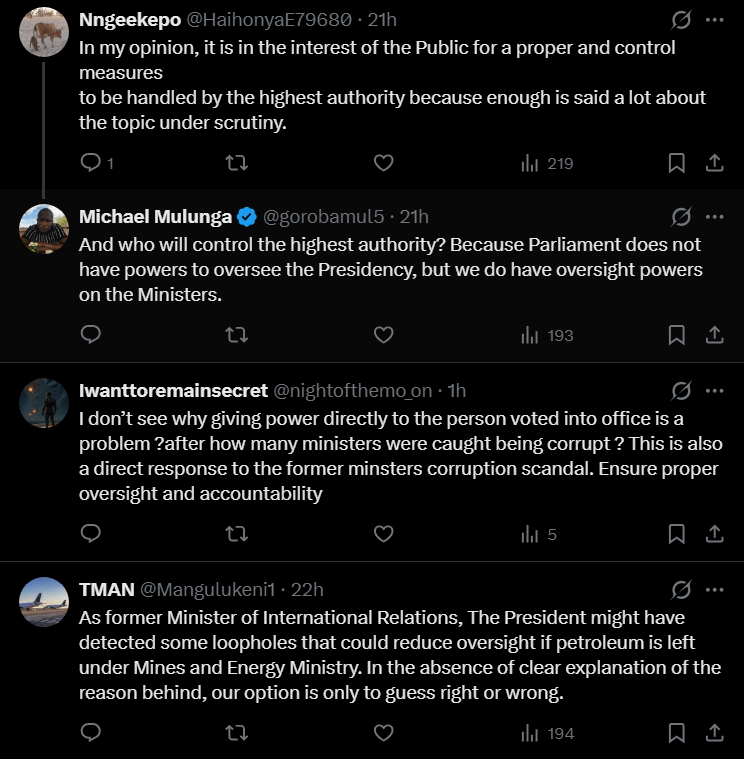
Public reaction online shows that Namibians are divided. Some believe shifting authority to the highest office could strengthen accountability and eliminate the corruption that previously surrounded ministerial oversight. Others worry the move centralises too much power in one office, limiting Parliament’s ability to monitor an increasingly strategic sector. Several commenters say the pace of change, combined with limited public explanation, has left them unsure about the true intention of the reform.
One recurring theme is the belief that oversight must improve. Some commenters argue that past corruption scandals involving ministers justify placing upstream petroleum under the Presidency to ensure stronger control. Others counter that Parliament has legal oversight over ministers, but not over the President, meaning the reform could weaken democratic checks. Concerns about transparency appear across many posts, with users urging the government to clarify why this shift is necessary.
There is also discussion about institutional gaps and regulatory loopholes. One user suggested the President may have detected governance weaknesses within the Ministry of Mines and Energy and pushed for structural changes to ensure cleaner oversight. Another commented that without a clear explanation from the government, citizens are left to interpret the bill’s intentions on their own, which fuels suspicion.
A number of commenters raised constitutional concerns about who will regulate the regulator. They noted that Parliament can currently question ministers but cannot directly scrutinise the Presidency’s internal units. This may create a system where decisions about licensing, compliance, and royalty remissions are made without strong external oversight. Others, however, welcomed the idea that a specialised unit reporting to the highest office could provide consistent regulation in a fast‑changing petroleum landscape.
Some voices online connect the bill to Namibia’s emerging status as an oil player. They argue that major foreign investments require a stable, technically competent regulatory environment, which the new Upstream Petroleum Unit aims to deliver. But critics worry that centralising power during a period of large-scale discovery raises governance risks and could incentivise political interference if safeguards are not clear.
Despite the opposing views, most commenters agree on one point: proper oversight and accountability will determine whether the reform strengthens or weakens Namibia’s petroleum sector. Citizens are watching closely as Parliament continues debates on the bill and political leaders navigate the balance between efficiency, transparency and constitutional checks.
Original Reporting
Facts verified through multiple Namibian parliamentary and energy-sector reports detailing the amendment bill, its proposed Upstream Petroleum Unit, and the transfer of regulatory powers to the Presidency.
Primary Artefact
Public reactions reviewed from X posts between 12:00 and 17:00 CAT on 5 February 2026.
Also Read
About the Author


