
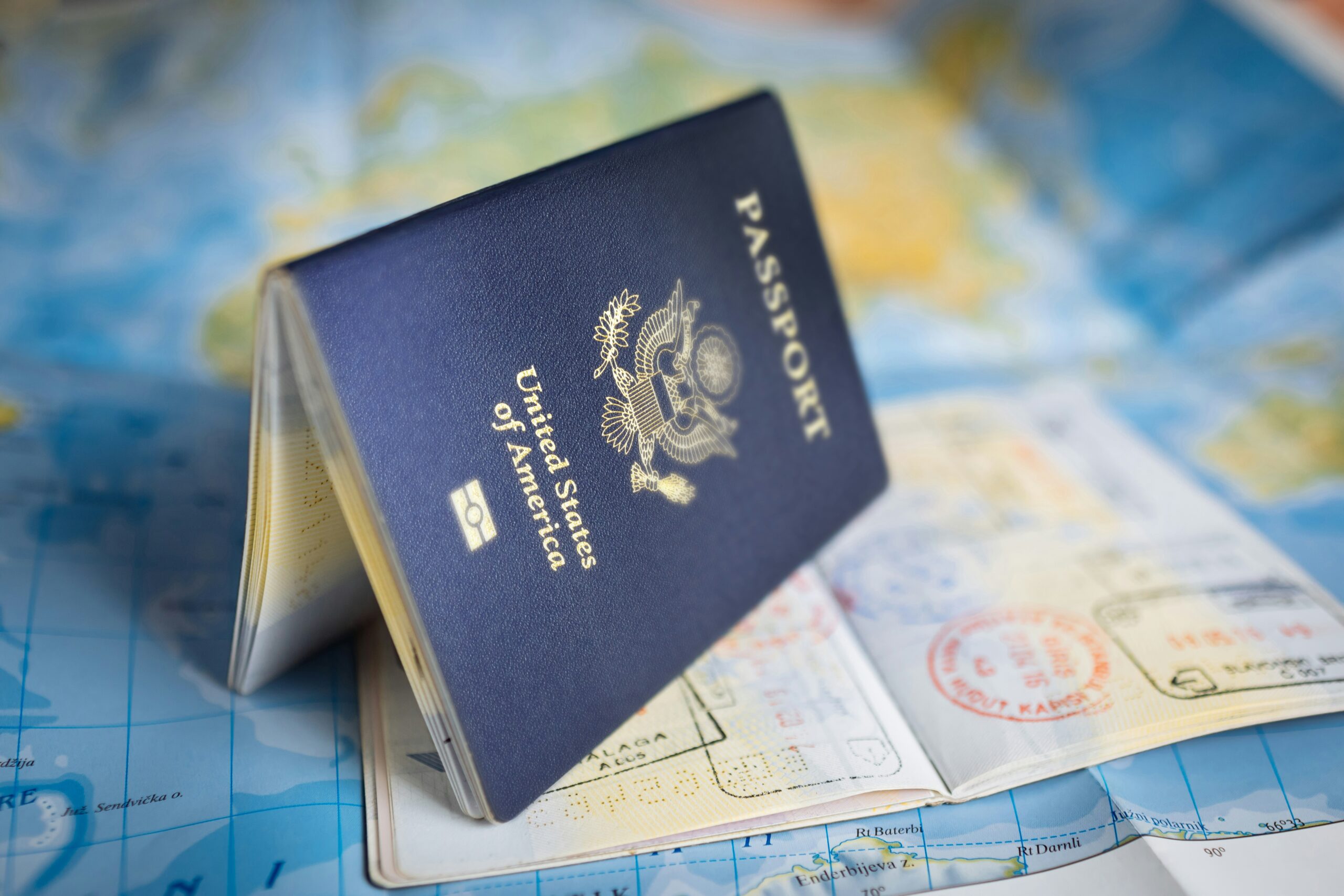
Photo by Global Residence Index via Unsplash
By Newz.Africa, News Desk | 26 March 2026 |United States of America | US visa bonds
The United States has expanded its visa bond programme, requiring deposits of up to $15,000 from nationals of 50 countries. The policy was confirmed in a State Department press release dated 18 March 2026. It directly affects supporters from five African nations that have qualified for the FIFA World Cup. As a result, the measure raises concerns about accessibility for fans hoping to attend matches in North America.
What’s Happening
The State Department press release announced that, effective 2 April 2026, nationals from 50 countries must pay refundable visa bonds when applying for B-1 or B-2 visas. These bonds range between $5,000 and $15,000. They are intended to reduce visa overstays.
The programme was first piloted in 2025 and has now been expanded to cover a wider group of countries. Among them are Algeria, Cape Verde, Côte d’Ivoire, Senegal and Tunisia. All of these countries have qualified for the 2026 FIFA World Cup.
Newz.Africa Analysis
The bonds operate as security deposits. Applicants must pay the amount upfront. The funds are refunded if travellers comply with visa conditions and exit the US within the permitted timeframe. The programme applies to tourist and business visas. These are the categories required for fans travelling to attend matches.
Cape Verde, making its first-ever World Cup appearance, faces particular challenges. Average annual incomes in the country are estimated at around $5,000. This means the bond alone could equal or exceed a year’s earnings for many supporters.
The 2026 World Cup will be hosted across the US, Mexico and Canada. Tunisia will play one group-stage match in the US, while Senegal and Côte d’Ivoire will play two. Algeria and Cape Verde are scheduled for group-stage games in Mexico. Despite this, many fans had planned to travel across borders to attend matches in US cities.
The expansion of the visa bond programme introduces significant barriers for African supporters. For Cape Verde, the financial requirement risks excluding fans from witnessing a historic moment in the nation’s sporting history.
The absence of exemptions for supporters contrasts with earlier travel bans. Those bans excluded athletes and officials participating in major sporting events. Under the bond programme, ordinary fans face prohibitive costs. These costs are compounded by high ticket prices, inflated accommodation rates, and visa processing delays.
The broader implication is that African representation at the World Cup may be diminished. Attendance figures could be affected, and the cultural visibility of African supporters, a hallmark of international tournaments may be reduced. This raises questions about inclusivity at a global sporting event that prides itself on diversity and shared experience.
The policy also highlights the intersection of immigration regulation and international sport. While the State Department frames the bonds as a tool to manage overstays, the timing of the expansion places additional strain on fans from countries with lower income levels. As a result, the risk is that the World Cup atmosphere in US cities may lack the vibrancy brought by diverse supporter groups.
How US visa bonds work
Visa bonds are financial deposits required by the United States government from certain foreign nationals applying for short-term visas. They function as a form of security to ensure travellers comply with visa conditions. The bonds also ensure travellers leave the country within the permitted timeframe.
B-1 (business) and B-2 (tourist) visa
The bonds apply to B-1 (business) and B-2 (tourist) visas. Applicants must pay between $5,000 and $15,000 upfront when requested by a consular officer. The amount is held by the US government during the visa period. If the traveller exits the country on time and follows all visa rules, the bond is refunded in full.
The programme was introduced as a pilot in 2025 and expanded in 2026 to cover nationals from 50 countries. The State Department frames the measure as a deterrent against visa overstays. These overstays occur when visitors remain in the US beyond their authorised period.
For many applicants, especially from lower-income countries, the bond represents a significant financial burden. While refundable, the upfront cost can make travel unaffordable. This is especially true for fans planning to attend international events such as the FIFA World Cup.
Original Reporting
Newz.Africa reviewed the US State Department press release dated 18 March 2026 confirming the expansion of the visa bond programme.
About the Author


