
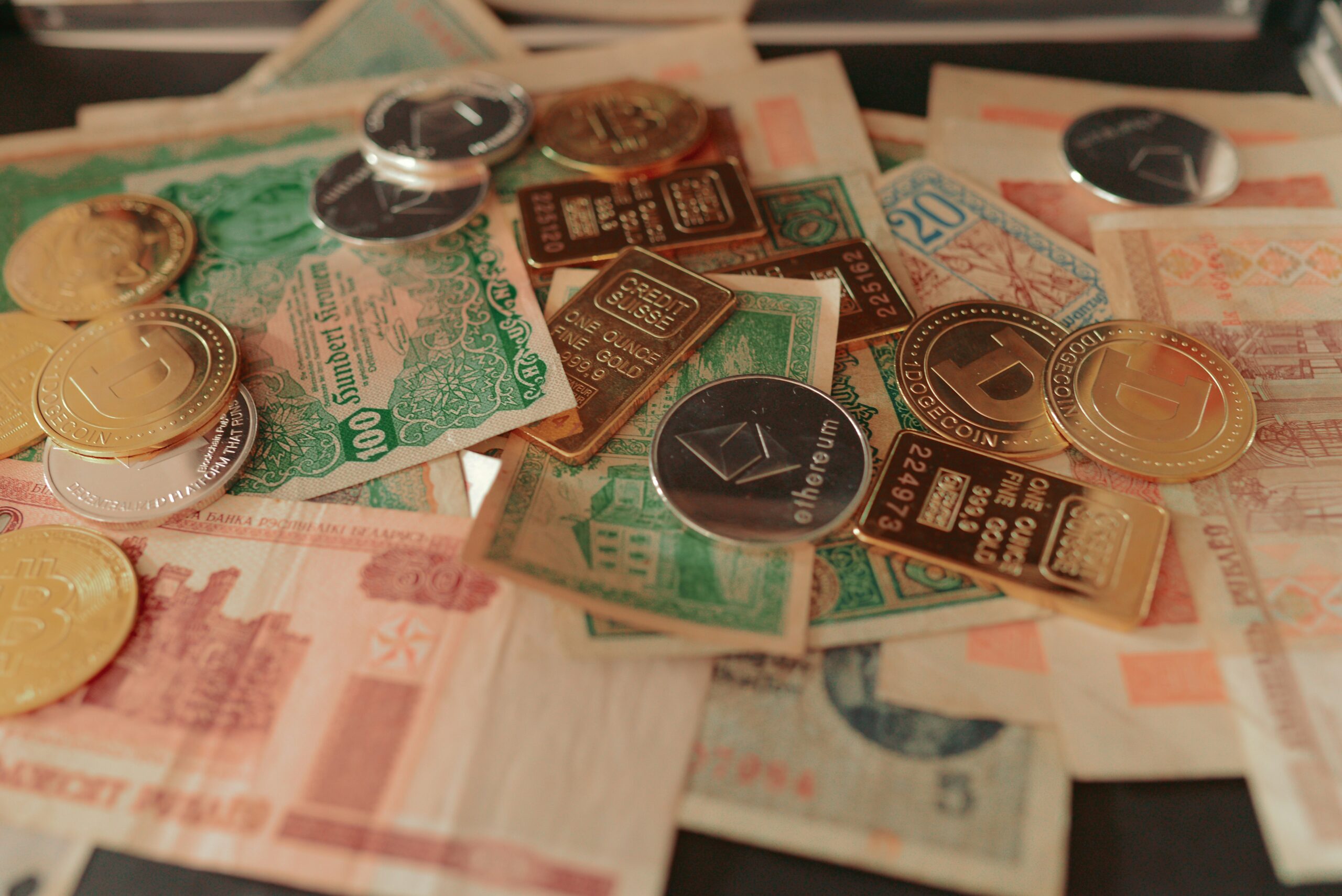
Photo by rc.xyz NFT gallery via Unsplash
By Newz.Africa, Economy Desk | March 9, 2026 | Cairo, Egypt | Egyptian pound depreciation
Analysts confirm Egypt’s currency crisis is deepening, with the pound sliding to 52.2 per dollar and foreign investors pulling billions from local debt markets. Experts warn that geopolitical instability and reliance on external financing are eroding confidence.
The Egyptian pound fell to its weakest level on record this week, dropping below 52 pounds to the US dollar in official markets. The sharp depreciation follows significant foreign capital outflows from Egypt’s bond market, driven by regional instability and investor concerns over the country’s economic trajectory.
What’s Happening
On Sunday, Cairo’s major banks, including Abu Dhabi Islamic Bank, Bank of Alexandria, and Banque Misr, listed the dollar at 52.15 pounds for buying and 52.25 for selling. This marks a 4.3% decline in a single day and the lowest official exchange rate ever recorded for the Egyptian currency.
Bloomberg reported that “Egypt’s pound posted its biggest single-day drop since a devaluation two years ago, as the Middle East’s most populous country continues to be buffeted by the shockwaves of the Iran war”.
The Central Bank of Egypt confirmed the official rate at 52.72 for buying and 52.82 for selling on March 9, 2026. Trading Economics noted that analysts expect the pound to trade closer to 50 by the end of the quarter, suggesting some stabilisation if reforms hold.
Preliminary banking data indicates that foreign investors have withdrawn between 2 and 5 billion US dollars from Egypt’s Treasury bills and bonds over the past week.
What Netizens Are Saying
Online discussions reflect a mix of scepticism and guarded support. One user asked bluntly:
“Did they have other choice professor?” while another insisted, “Thou shalt not borrow from foreign nations what you can do better for one’s own!”
Others pointed to IMF reforms, with one commentator noting: “
The IMF’s program is to make Egyptian economy more flexible and competitive by making the army start to stop making their own business that they always get advantages.”
Comparisons with Ghana also surfaced. A widely shared post argued:
“At least when Egypt borrows, they use it for investments and infrastructure that will help future generations. When Ghana borrows, politicians squander it and future generations will suffer for it.”
Newz.Africa Analysis
The Egyptian pound’s record low underscores the fragility of economies heavily reliant on foreign capital inflows. While Egypt’s infrastructure drive has been ambitious, the combination of external shocks, investor flight, and structural reforms has exposed vulnerabilities.
Analysts quoted by Bloomberg emphasise that the war in Iran has amplified regional volatility, directly impacting Egypt’s financial markets. The IMF programme remains central to Egypt’s economic strategy, particularly its requirement to unify exchange rates and reduce military involvement in commercial activity. These reforms aim to create a more competitive and transparent economy, but they also carry short-term costs, including currency volatility and reduced investor confidence.
Looking ahead, Egypt’s challenge will be balancing infrastructure investment with fiscal discipline. The withdrawal of billions in foreign capital highlights the risks of dependence on external financing, especially during periods of geopolitical instability. For ordinary Egyptians, the depreciation translates into higher import costs and inflationary pressure, adding strain to household budgets.
The long-term trajectory will depend on whether Egypt can sustain reforms that encourage private sector growth and attract stable investment. If successful, the current turbulence may be remembered as a painful but necessary step toward a more resilient economy. If not, Egypt risks deepening its cycle of debt and currency crises.
About the Author