
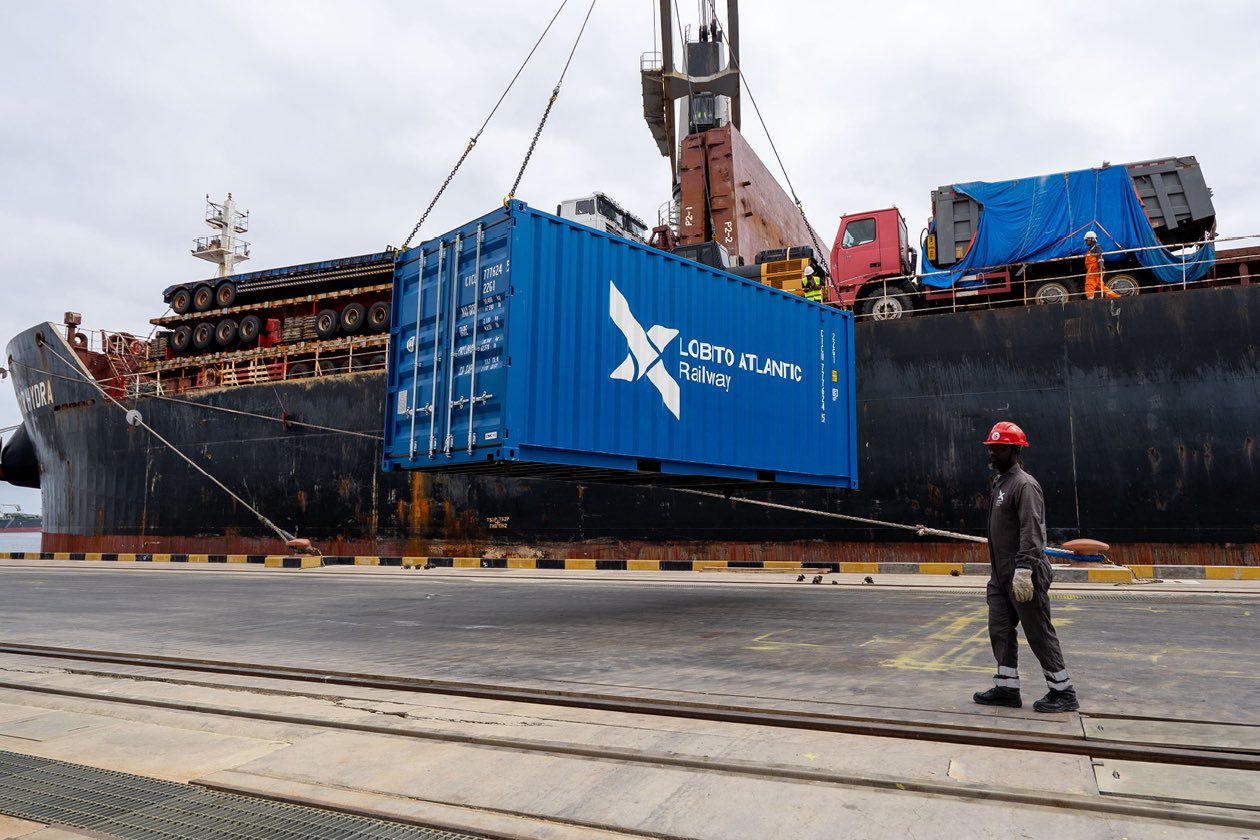
Image by Robert Friedland via X
By Newz.Africa Business Desk | Johannesburg, South Africa | 20 February 2026 | Lobito Corridor copper shipment
The Lobito Corridor has completed its first shipment of copper anodes with a purity of more than 99.7 percent. They moved material from the Kamoa-Kakula mining complex in the Democratic Republic of Congo to global markets via Angola. The copper travelled along the Lobito Atlantic Railway to the port of Lobito, establishing a direct export route from Central Africa’s copper belt to the Atlantic Ocean.
Ivanhoe Mines founder Robert Friedland explained in an update on X, that the first 99.7 percent pure copper shipment along the Lobito Corridor is a milestone for Kamoa-Kakula and Africa’s advancing mining infrastructure.
The shipment confirms that the long‑planned rail and port system is now operational at commercial scale. It shortens export timelines, reduces reliance on congested routes, and strengthens the DRC’s position in global copper supply chains at a time of rising demand driven by electrification, renewable energy infrastructure, and electric vehicle manufacturing.
Lobito Corridor copper shipment confirms operational milestone
Industry figures involved in the corridor describe the shipment as a turning point for African mining logistics. Copper from Kamoa-Kakula is transported by rail rather than by extended road routes, cutting costs and improving predictability for buyers. The copper is refined using lower‑carbon industrial processes abroad, aligning with growing pressure from manufacturers to reduce the environmental footprint of critical minerals.
Supporters argue that the corridor changes how African minerals reach international markets. Faster transit times and improved reliability reduce supply‑chain risk, a key concern for global industries that depend on copper for energy transition technologies. For Angola and the DRC, the corridor also signals the potential to anchor future industrial activity around rail, ports, and energy infrastructure.
What netizens are saying about the Lobito Corridor
Public reaction online has been sharply divided. Some users praised the shipment as proof that Africa’s infrastructure gap is finally narrowing. Posts highlighted the complexity of moving high‑value minerals across borders and framed the corridor as evidence that large‑scale logistics projects on the continent can now deliver tangible results.
Others expressed unease about the broader implications. Several commentators described the Lobito Corridor as a modern extension of historic extraction routes, arguing that Africa continues to export raw materials while value addition happens elsewhere. Questions were raised about how much benefit local communities and economies will see beyond employment linked to mining and transport.
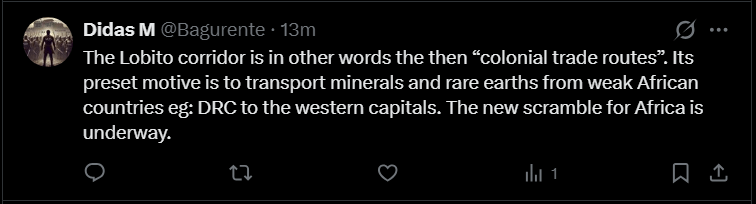
Political concerns also surfaced. Some users pointed to ongoing instability in eastern DRC, questioning how major critical mineral deals can advance while security and governance challenges persist. The contrast between efficient export infrastructure and unresolved conflict became a recurring theme in online discussion, reflecting long‑standing scepticism around who ultimately benefits from mineral wealth.
Why the Lobito Corridor matters for Africa’s mineral future
Newz.Africa Analysis: The reaction highlights a central tension. Infrastructure can unlock growth, but it does not automatically deliver inclusive development. The Lobito Corridor improves speed, cost efficiency, and access to markets, but public sentiment suggests expectations go further. Many observers want to see downstream beneficiation, stronger revenue transparency, and industrial capacity built closer to the source of production.
From a strategic perspective, the corridor strengthens Africa’s role in the global copper market. Reliable logistics reduce risk premiums and increase competitiveness. The long‑term impact, however, will depend on policy choices. If rail connectivity is paired with regional smelting, manufacturing, and skills development, the corridor could support a broader industrial ecosystem. If not, it risks reinforcing extractive patterns that have historically limited local value creation.
The first copper shipment proves the corridor functions. Whether it reshapes Africa’s economic position or simply accelerates existing trade flows will be determined by what follows.
About the Author