
Photo by @techopse via X
Africa Desk | Africa | 17 February 2026 | Relooted game
Relooted game reactions dominate online debate
Public reaction to the newly released video game Relooted has been immediate and divided. On social media, users have questioned its historical framing, its cultural representation, and its gameplay relevance.
Some critics argue that the title fabricates or omits key aspects of African history. They point to artifacts such as the Dahomey Silver Buffalo, which is presented without reference to the Dahomey Empire’s reliance on slavery. Others dismiss the game outright, describing it as an “African crime simulator” or accusing it of glorifying theft.
Supporters highlight the game’s stated purpose: to raise awareness about looted African heritage and the scale of cultural loss to European museums. BBC Africa described the release as a chance for Africans to “fantasise about taking back treasures.” In turn, this positions the game as part of a wider conversation about restitution and cultural memory.
Relooted game struggles with player engagement
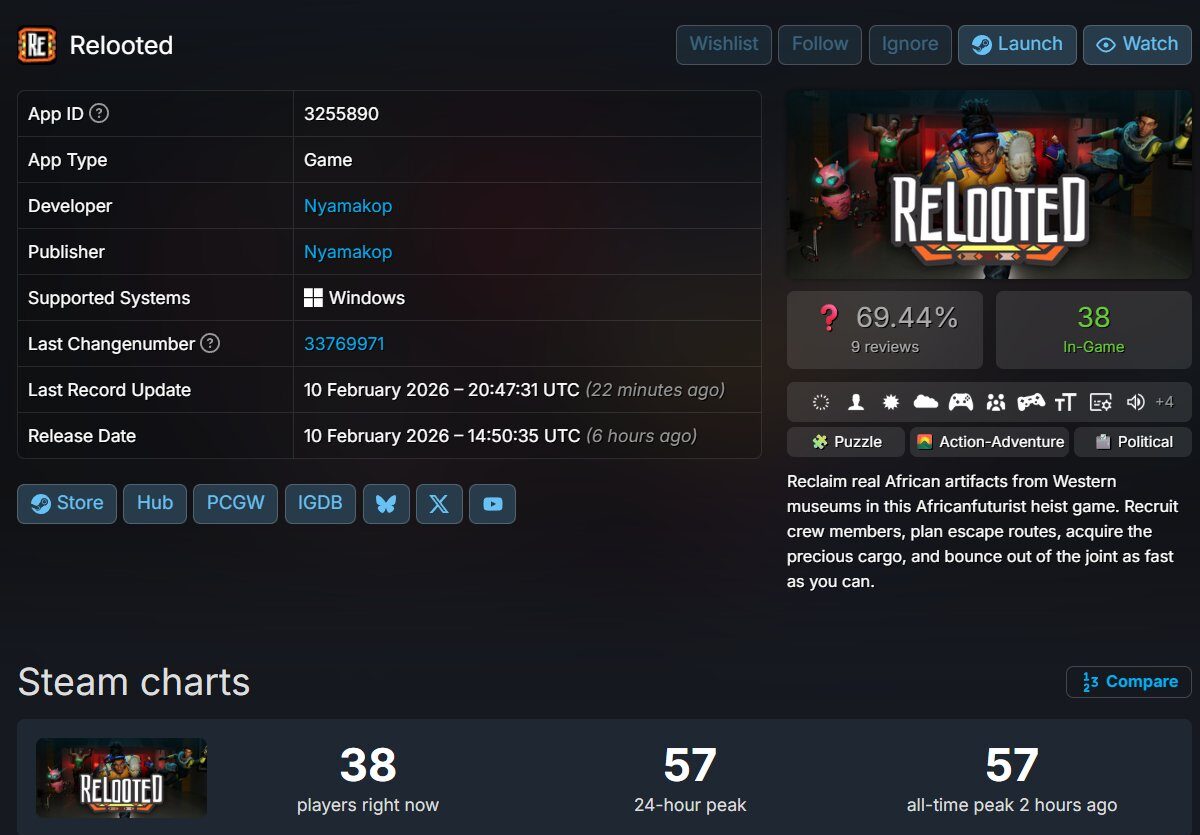
Despite the attention, player statistics show limited uptake. Steam charts recorded peaks of fewer than 60 players in the first 24 hours. Current activity has dropped into the teens. Social media commentary has amplified this reality, with some users noting that the number of likes on critical posts far exceeds the number of active players. The low engagement has been used by detractors to argue that the game is “dead on arrival.”
Relooted game raises cultural representation questions
The debate extends beyond numbers. Tweets reflect concern that the game leans into stereotypes rather than offering nuanced storytelling. One user expressed disappointment that Africanfuturist visions were sidelined in favour of crime‑based mechanics. Another questioned whether the framing of heists and theft undermines the cultural message the developers intended.
Relooted game enters contested cultural space
The release by South African studio Nyamakop places Relooted in a contested cultural space. It is marketed as a puzzle and action‑adventure title. However, its reception has been shaped more by commentary than gameplay. The tension between its stated mission reclaiming African artifacts and the public’s interpretation underscores the difficulty of translating cultural advocacy into interactive entertainment.
The conversation around Relooted illustrates how games that attempt to address historical and cultural themes can quickly become sites of debate. Whether the title gains traction or fades from view, its launch has already ensured that questions of African heritage, restitution, and representation remain part of the public discourse.
About the Author