
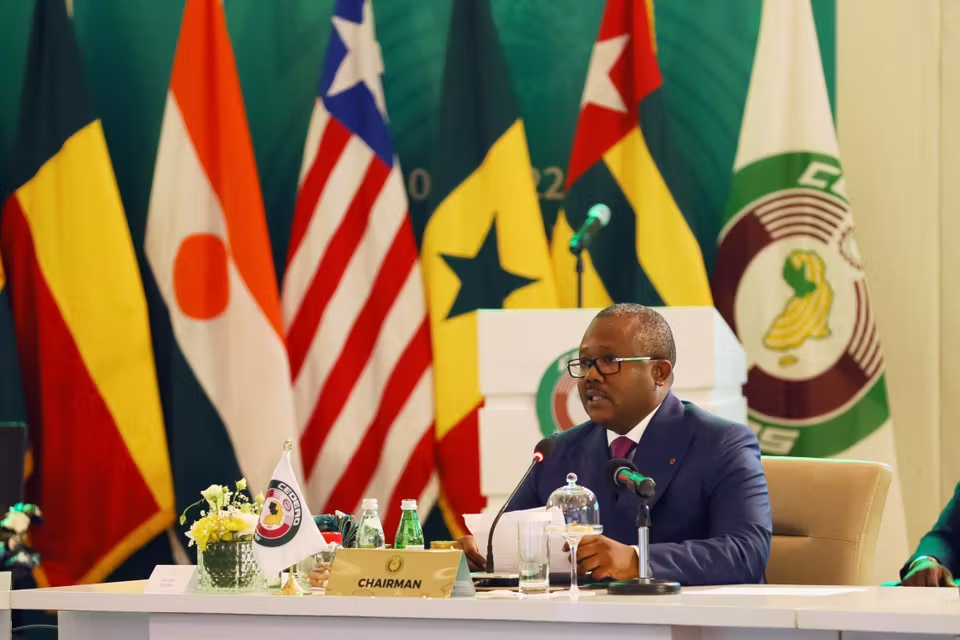
A WAEMU court ruling has overturned the 2022 economic blockade on Mali. Image by NIPAH DENNIS / AFP via Le Monde
By Newz.Africa Business Desk | Bamako, Mali | 12 February 2026 | Mali sanctions WAEMU ruling
A WAEMU court ruling has overturned the 2022 economic blockade on Mali. The decision challenges the legality of sanctions imposed by the West African Economic and Monetary Union. It matters because the ruling questions the use of trade restrictions as political tools in a region built on integration.
WAEMU court ruling and Mali’s blockade
The WAEMU Court delivered its judgment in late January 2026, striking down sanctions placed on Mali in 2022. According to APA News, the Ouagadougou-based court found the measures legally irregular and inconsistent with community law. The ruling sided with Mali, which had long contested the authority of WAEMU to impose punitive economic restrictions.
⚖️ WAEMU Court of Justice rules sanctions against Mali in 2022 illegal, according to its judgment
— Sputnik Africa (@sputnik_africa) January 30, 2026
The West African Economic and Monetary Union (WAEMU) lacked a clear legal basis to implement the measures decided within a political framework by ECOWAS, the court noted.
ℹ️… pic.twitter.com/Yvc846F7OL
Economic impact of the Mali sanctions
Reports from The News Chronicle confirm that the blockade disrupted Mali’s access to essential goods and financial systems. TheCable noted that shortages of fuel and food were widely reported during the period. Local businesses struggled to maintain supply chains, and cross-border trade slowed significantly.
Regional integration under strain
Africanews reported that the ruling has reignited debate about the future of integration in West Africa. Analysts argue that politicising trade undermines investor confidence and weakens the region’s collective bargaining power. The decision has raised questions about whether integration is fracturing or evolving.
Policy coherence between WAEMU and ECOWAS
Economist Modibo Mao Makalou told Africanews that the decision reflects deeper structural issues. He pointed to the lack of policy coherence between WAEMU and ECOWAS, two institutions that often overlap but differ in enforcement. He warned that “without alignment, regional blocs risk sending mixed signals to investors and member states”.
Expert views on the ruling
Euronews quoted Afolake Oyinloye, a business analyst, who said the judgment “shows that sanctions must be carefully weighed against their economic fallout”. She added that the ruling “is a reminder that legal frameworks must guide political decisions to avoid destabilising economies”.
Broader implications for Africa’s economic future
Africanews noted that the decision has raised questions about Africa’s broader economic strategy. Some economists argue that prioritising trade stability and investor confidence could help the region compete globally. Others believe sanctions remain necessary to enforce democratic norms, but must be legally sound and economically sustainable.
Image guidance: Hero image alt text: WAEMU court ruling overturns Mali sanctions
Original reporting
What we confirmed:
- We reviewed reports from BBC Africa, The News Chronicle, Sahara Reporters, TheCable, APA News, Euronews and Africanews.
- We confirmed the timeline of the 2022 blockade and the January 2026 ruling.
- We verified statements from economists and analysts quoted in Bamako and regional outlets.
- We checked WHO and African Union context on trade and integration impacts in Africa.
Also read:
About the Author