
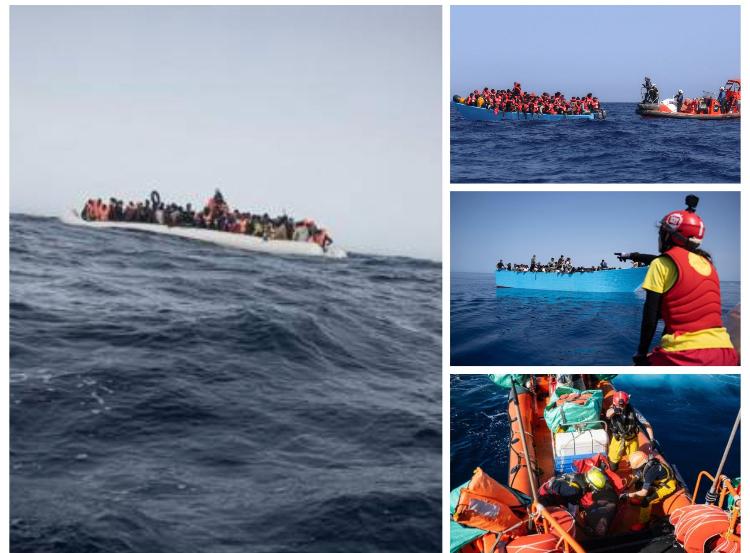
Photo Screenshot from X
By Newz.Africa Migration Desk | Tripoli, Libya | 10 February 2026 | Migration tragedy
Fifty-three people are dead or missing after a migrant boat capsized off the Libyan coast, the UN migration agency confirmed. Only two survivors were rescued. The incident has drawn widespread public sorrow, with voices online framing the disaster as a humanitarian crisis.
The Mediterranean crossing has claimed thousands of lives over the past decade, according to IOM data. Despite the risks, many continue to attempt the journey, driven by conflict, poverty, and the lack of safe migration pathways. Survivors and commentators alike stress that staying behind often feels more dangerous than leaving, even in unseaworthy boats.
Public reaction to migration tragedy
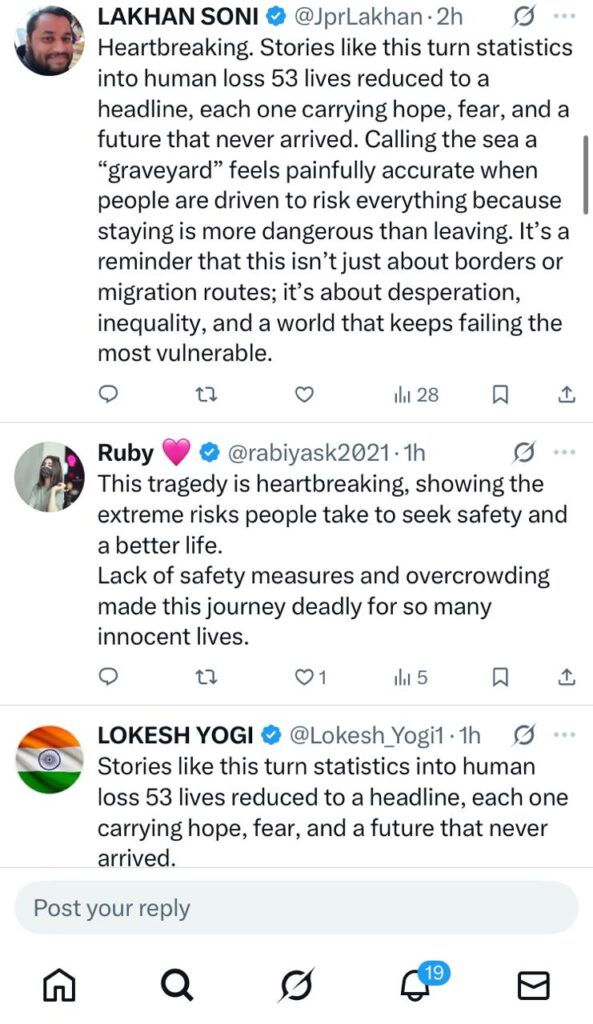
Social media users expressed grief and anger at the loss. Posts described the Mediterranean as a “graveyard” and emphasised that each life lost carried hope and fear. One survivor told the International Organization for Migration (IOM) she lost her husband, while another said she lost her two babies. Online commentary highlighted desperation and inequality as drivers of such perilous journeys.
UN migration agency details incident
According to the IOM, the boat departed Al-Zawiya, Libya, at around 11pm on 5 February. It capsized six hours later after taking on water north of Zuwara. Libyan authorities rescued two Nigerian women, who received emergency medical care. The IOM said smuggling networks continue to exploit migrants, exposing them to severe abuse and unsafe crossings.
Calls for safer migration pathways
The IOM urged stronger international cooperation to dismantle trafficking networks and provide safe migration routes. A European Commission spokesperson told Agence France-Presse that Brussels is working with partners, including Libya, to prevent dangerous journeys and combat smuggling. Between 2014 and 2025, more than 33,000 migrants died or went missing in the Mediterranean, per IOM data.
Original Reporting:
- Verified IOM statement, AFP wire copy, and survivor accounts cited by the UN agency. Reviewed social media posts reflecting public sentiment.
- Primary artefact: International Organization for Migration press release, 9 February 2026.
Also Read:
About the Author


