
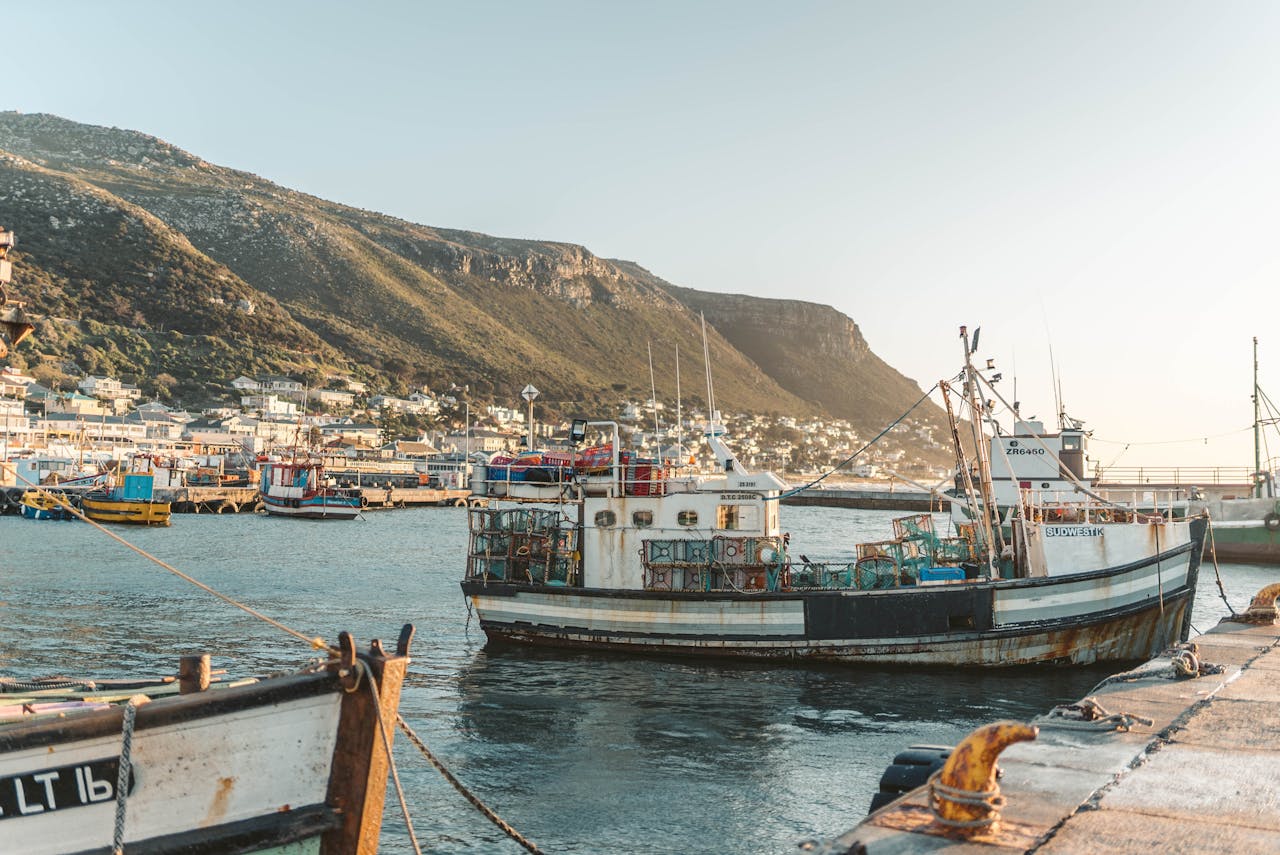
Image by Tarryn Elliot via Pexels
South Africa’s fishing industry is under strain. Court fights are piling up. Small‑scale fishers are protesting. Scientists warn about collapsing stocks. Companies say policy is erratic. Communities say livelihoods are at risk.
Legal challenges are reshaping the sector. Industry groups and firms have taken the state to court over disputed quotas and the scoring of applications. Cases target the recent rights allocation process and appeal outcomes. Litigants claim the process was rushed and unfair. Government says it was lawful and transparent. Outcomes could unsettle access to key species.
The squid sector is a flashpoint. Large commercial right‑holders went to court to stop part of the squid quota being reserved for small‑scale co‑operatives. They argue the split threatens jobs and was not properly consulted. Small‑scale fishers say the change is overdue and supports transformation. The case captures the tension between long‑standing firms and new entrants.
Policy signals are mixed. The department announced a 36 percent increase in “own‑use” allocations for small‑scale fishers. It said the move empowers communities and boosts coastal economies. Fishers welcomed the intent but asked how “own‑use” creates jobs if sale of catch is restricted. They also want clarity on which species and which harbours are covered.
Field pressure is rising. West Coast rock lobster and abalone have long been hit by poaching and weak enforcement. Scientists note stress on several stocks and urge tighter management. Officials extended certain permits while appeals and court reviews play out. That keeps boats working, but it also delays certainty.
Small‑scale fishers have marched. Groups on the West Coast and in Cape Town say rights were allocated without enough transparency. They want licences that support income, not only subsistence. They also want functional harbours, safer launches, and faster decisions on appeals.
The industry is uneven. Hake remains the anchor, with export demand helping major producers. A higher total allowable catch in 2025 lifted volumes for some trawl fleets. Companies reported better catch rates and prices. Yet pelagic quotas for anchovy and sardine have been cut in recent years. That squeezes processors and coastal jobs tied to fishmeal and canning.
The stakes are high. Around 16,000 people work directly in marine fisheries. Many more rely on the value chain. When rights are delayed or overturned, crews stand down. Plants slow. Debt builds. When rules change midstream, firms hold back on investment. When rules do not change at all, transformation stalls.
Everyone agrees on one thing. Stability is needed. That means credible science. Clear, timely rights decisions. Transparent scoring. Real consultation with small‑scale groups and coastal towns. And enforcement against poaching and paper quota deals. Without that, the sector becomes a courtroom first and a fishery second.
Sources:
Also read:
About the Author


