
By Newz.Africa |News Desk| 19 February 2026 | Forest conservation
Public reaction to forest loss has intensified, with online voices framing trees as vital climate infrastructure rather than scenery. The debate has been fuelled by alarming statistics, striking imagery, and calls for urgent reforestation. Commentators highlight the ecological services forests provide, from cooling landscapes to securing groundwater. Others point to global greening trends, noting millions of trees planted in countries such as China and Russia. Africa’s own deforestation rates and reforestation campaigns have placed the continent at the centre of this global conversation.
Public Debate on Forest Conservation
Social media feeds have been filled with commentary on forests as climate infrastructure. Users have stressed that conservation alone is insufficient. One widely shared post declared that half of the world’s forests are already gone. It urged reforestation as the only viable path forward. Others described forests as “live infrastructure,” pointing to their role in cooling landscapes and securing groundwater. The conversation has been shaped by both alarm and cautious optimism. In addition, statistics and imagery are circulating to illustrate the scale of deforestation and replanting efforts.
The debate has also drawn attention to the long timelines involved. A reminder that most trees take around 80 years to reach maturity underscored the generational nature of forest recovery. This has resonated with audiences who see the urgency of halting further loss. At the same time, they acknowledge that restoration requires decades of commitment.
Forest Conservation as Climate Infrastructure
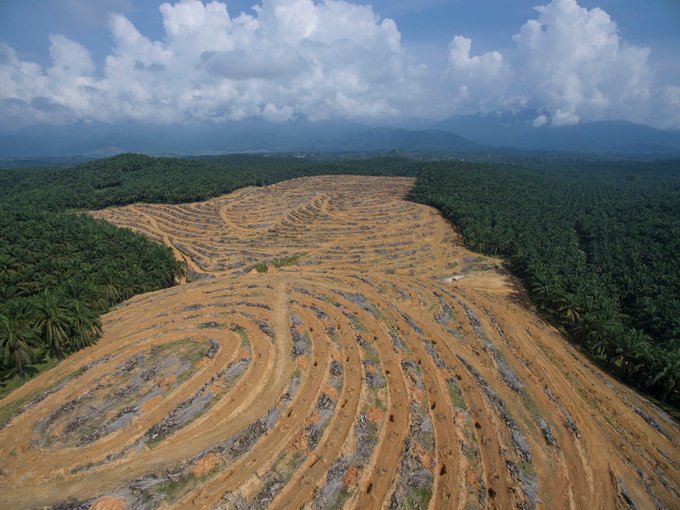
Commentators have framed forests as essential systems underpinning water security, biodiversity, and carbon storage. The United Nations Food and Agriculture Organization’s 2025 Forest Resources Assessment reported that 10.9 million hectares of forest were lost globally in a single year. That figure, equivalent to the size of Iceland, has been widely cited in online discussions. The loss represents billions of trees removed through logging, fires, and land conversion. This has fuelled climate instability and wildlife decline. The framing of forests as “climate infrastructure” has gained traction, shifting the narrative from aesthetics to necessity.
Global Greening and Reforestation Efforts
While deforestation statistics have dominated, some posts pointed to positive developments. NASA data was shared showing a greening of the Earth equivalent to twice the area of North America. Countries such as China, Russia, and France were credited with planting millions of trees. These contributed to measurable increases in forest cover. These efforts were presented as evidence that large-scale reforestation is possible. However, commentators noted that gains are uneven and often concentrated in specific regions. Supporters of reforestation initiatives argue that global greening demonstrates capacity for recovery, while critics stress that monoculture plantations cannot replace the ecological richness of old-growth forests.
Africa’s Forest Statistics
Africa has been central to the conversation, given its significant forest resources and vulnerability to climate change. According to FAO data, Africa lost approximately 3.9 million hectares of forest annually between 2010 and 2020. The Congo Basin accounted for much of the decline. The Democratic Republic of Congo alone recorded losses of over 500,000 hectares per year, driven by agriculture and logging. These figures place Africa among the regions with the highest deforestation rates worldwide. At the same time, African governments and communities have launched reforestation programmes. Ethiopia’s “Green Legacy” initiative reported planting more than 25 billion seedlings since 2019. It aims to restore degraded land and improve water security. Kenya has set a target of achieving 30% tree cover by 2032. Additionally, South Africa has promoted community-led planting schemes to rehabilitate catchment areas.
Material Alternatives and Sustainability
Another strand of online discussion focused on reducing reliance on wood products. Posts suggested cutting back wood usage by 30 to 50% through alternatives such as bamboo and hemp. Examples included bamboo cutting boards, presented as practical substitutes for timber-based household items. Advocates argued that shifting consumer demand could ease pressure on forests. Meanwhile, critics questioned whether such measures address industrial-scale logging and land conversion. While bamboo and hemp grow quickly and can be harvested with lower ecological impact, their adoption depends on market availability, consumer behaviour, and policy support.
Renewable Energy and Land Use
Posts also drew attention to alternative land use strategies. One example cited China’s construction of solar farms on water and mountains, preserving arable land for agriculture. This approach was framed as a model for balancing energy expansion with land conservation. For African countries facing pressure to expand renewable energy while safeguarding food security, such strategies may offer lessons in integrated planning.
Analysis of Public Reaction
The online discourse reveals a layered public response. Alarm over deforestation statistics coexists with cautious optimism about reforestation data. Calls for material substitution sit alongside demands for systemic land-use reform. The framing of forests as climate infrastructure has resonated strongly, suggesting a shift in public understanding of their role. Africa’s forest statistics have added urgency, situating the continent at the centre of global debates on sustainability. Public reaction reflects both the scale of the challenge and the diversity of proposed solutions, from household choices to national reforestation campaigns. Finally, forests are increasingly recognised as active systems underpinning climate stability, water security, and biodiversity.
About the Author


